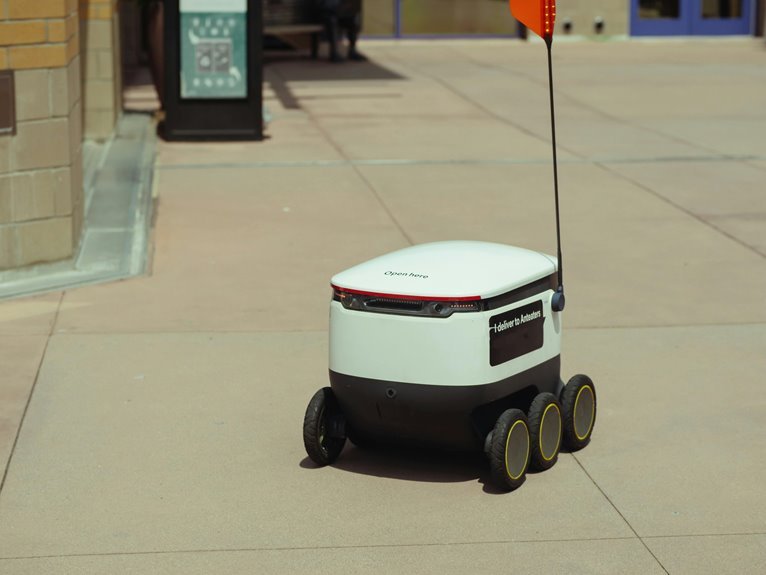
AI-powered technology is reshaping the landscape of business efficiency. By automating repetitive tasks, it minimizes human error and reallocates resources effectively. This innovation not only drives down costs but also enhances decision-making through advanced analytics. As organizations increasingly adopt these solutions, they unlock new levels of agility and operational excellence. The implications of this shift are profound, prompting a closer examination of its impact across various industries. What unfolds next may redefine conventional business practices.
How AI Powered Technology Optimizes Business Workflows
As businesses increasingly adopt AI-powered technology, they discover that it significantly enhances operational efficiency by streamlining workflows.
Workflow automation enables repetitive tasks to be executed with minimal human intervention, freeing employees to focus on strategic initiatives.
Moreover, process optimization through AI analytics provides insights that refine operations, resulting in enhanced productivity and a more agile business environment.
Ultimately, this fosters a culture of innovation and adaptability.
Key Cost Savings From Implementing AI Solutions
While many organizations recognize the transformative potential of AI solutions, the key cost savings associated with their implementation often drive the decision to adopt these technologies.
AI enhances operational efficiency by automating routine tasks, leading to significant cost reduction. Furthermore, it minimizes human error and optimizes resource allocation, enabling businesses to redirect funds towards innovation and growth, ultimately fostering a more agile organizational framework.
Enhancing Decision-Making With AI Data Analytics
Incorporating AI data analytics into organizational frameworks significantly enhances decision-making processes, as it facilitates the extraction of actionable insights from vast datasets.
Through data visualization techniques, complex information becomes accessible, enabling stakeholders to grasp trends swiftly.
Additionally, predictive modeling allows organizations to forecast outcomes and identify potential risks, thus empowering leaders to make informed decisions that promote efficiency and innovation.
Real-World Applications of AI in Various Industries
Although AI technology is often associated with futuristic concepts, its real-world applications across various industries demonstrate tangible benefits today.
In healthcare advancements, AI enhances diagnostic accuracy and patient care efficiency. Meanwhile, manufacturing automation streamlines production processes, reduces costs, and minimizes human error.
These applications reveal AI’s potential to transform industries, thus fostering innovation and enabling organizations to thrive in a competitive landscape.
Conclusion
In the landscape of modern business, AI-powered technology emerges as a beacon of efficiency, illuminating pathways to innovation and excellence. By automating mundane tasks and unlocking the potential hidden within data, organizations can navigate the complexities of their industries with agility and precision. As companies harness these transformative tools, they not only reduce costs but also cultivate a fertile ground for strategic growth, ensuring they remain competitive in an ever-evolving marketplace. The future beckons, rich with possibilities.